
Short answer: Choose a soft-bristled brush with a head small enough to reach the back teeth without forcing the mouth open: a finger brush or small-headed brush for cats, toy breeds and beginners, and a larger head or a dual-headed brush for bigger dogs. Brush daily at about 45° to the gumline with a pet toothpaste, and replace the brush every three months, or sooner if the bristles splay.
What a toothbrush does
Soft bristles angled into the line where tooth meets gum sweep away soft plaque before it has time to harden. That is how daily brushing helps reduce plaque build-up and helps keep tartar from building up. Soft matters: a dog's or cat's enamel is only about 0.1 to 0.6 mm thick, and gums can be tender while your pet gets used to brushing.
Types of brush
- Handled brush. The best everyday tool once accepted: the handle reaches the back teeth and the gumline.
- Dual-headed brush. A larger head at one end and a smaller one at the other, for big cheek teeth and small front teeth.
- Finger brush. Fits over a fingertip. Ideal for puppies, kittens and the first weeks, when you want to feel the pressure you use.
- Small-head cat brush. A tiny head with ultra-soft bristles for a small mouth.
In the Petdentist® range
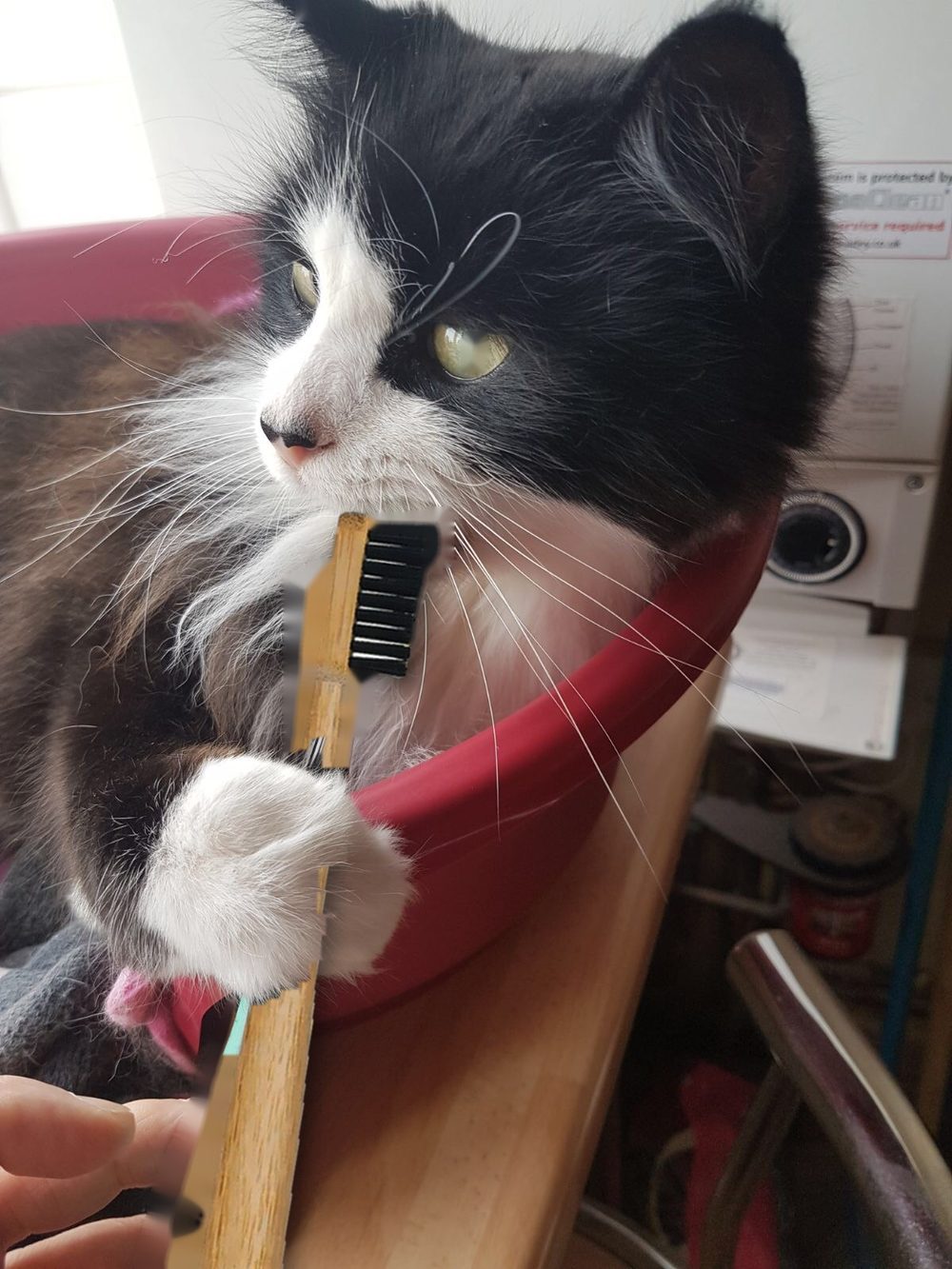
Our Eco Bamboo Charcoal Toothbrushes pair a bamboo handle with ultra-soft, micro-tapered, charcoal-infused bristles, and there is a matching bamboo case for travel. We also sell finger toothbrushes. Bamboo and charcoal describe what the brush is made of, not what it does: soft bristles and your technique do the cleaning. Read what bamboo handles and charcoal bristles are, and are not, and check your country store for the sizes available.
How to choose
- Species. Cats need the smallest head and the softest bristles, or a finger brush.
- Age. Start puppies and kittens on a finger brush, and move to a handled brush once they accept it.
- Size. Small heads for toy and short-muzzled breeds, larger heads and longer handles for big dogs.
- Temperament. The right brush is the one your pet accepts every day.
How to use it, and look after it
Brush once a day, or every other day at the very least. Lift the lip, angle the bristles at about 45° towards the gumline and use small, gentle strokes along the outer surfaces: about 30 to 60 seconds a side for a dog, and around 30 seconds a side for a cat once accepted. If the bristles splay flat, you are pressing too hard. Afterwards, rinse, shake and stand the brush upright to air-dry. The case is for travel, not for storing a wet brush. Give each pet their own brush.
What a brush cannot do
A brush removes soft plaque from the surfaces it reaches. It cannot shift tartar that has already hardened, clean below the gumline or show what is happening inside a tooth. Those are jobs for your vet.
Safety notes
- Replace on time. Every three months, or sooner if the bristles are worn or the brush has been chewed.
- Store out of reach. A brush left within reach becomes a chew toy.
- Mind your fingers. Keep clear of the back teeth of a pet who might nip.
- Pet toothpaste only. Never human toothpaste, and never anything containing xylitol.
- Stop if gums bleed, or if your pet flinches at one tooth, and see your vet.
When to see your vet
If you notice loose or wobbly teeth, swelling, discharge, bleeding that does not settle, reluctance to eat, dropping food, drooling, pawing at the mouth or any change in behaviour, please contact your veterinary surgeon promptly. Home care supports professional care — it never replaces it.
Where it fits: Step 1, Clean
The brush is the core of Step 1 of the Petdentist Daily System, used with a pet toothpaste. For pets not yet ready for bristles, textured dental wipes bridge the gap.