Short answer: Dogs' mouths turn plaque into tartar fast. Their alkaline saliva (pH 7.5 to 8.5) lets minerals settle into soft plaque, which can start to harden within about 48 to 72 hours, and a 2021 Royal Veterinary College study found that 12.5% of UK dogs are diagnosed with periodontal disease in a single year. What works is little and often: clean along the gumline every day (every other day at the very least), add a measured dental powder over food, keep a tasteless water additive in the bowl, lift the lip once a week, and book a veterinary dental check at least once a year.
How a dog's mouth works
An adult dog has 42 teeth, ten more than we do, in jaws that range from a Chihuahua's to a Great Dane's. Four facts explain almost everything about keeping them clean.
- Alkaline saliva. Dog saliva sits at around pH 7.5 to 8.5; ours is closer to 6.5 to 7.0. That is why dogs rarely get the cavities people do, and why minerals from saliva settle so readily into plaque.
- A 48 to 72 hour window. Soft plaque can begin to harden into tartar within two to three days. Brush on Monday, skip to Thursday, and some of Monday's plaque has already started to set. Once it has, no brush will lift it.
- Thin enamel. Dog enamel is roughly 0.1 to 0.6 mm thick, against about 2 to 2.5 mm on a human tooth. Soft bristles and a pet toothpaste without harsh abrasives are kinder to it than anything designed for people.
- The gumline matters most. The plaque that settles where tooth meets gum is the plaque that matters, and it is exactly where kibble and most chews reach least. A soft brush or a textured wipe reaches it in seconds.
How common are dental problems in dogs?
A 2021 Royal Veterinary College VetCompass study of the veterinary records of 22,333 UK dogs, from 784 practices, found that 12.5% were diagnosed with periodontal disease in a single year.
You may also have seen the American Veterinary Medical Association's estimate that nearly 80% of dogs show signs of oral disease by the age of three. The two figures measure different things (diagnoses recorded in one year, against any sign over a lifetime), but they point the same way: dental care is part of ordinary life for most dogs.
Sources: Royal Veterinary College VetCompass, epidemiology of canine periodontal disease (2021); American Veterinary Medical Association (February 2026). Population figures are for education only. They are not a statement about your dog or about any product.
Which dogs need extra care
The same RVC study showed that risk is not evenly spread:
- Size. Dogs under 15 kg were 2.5 times more likely to be diagnosed than dogs of 30 to 40 kg.
- Age. Dogs aged eight or over were three times more likely than dogs aged two to four.
- Breed. Breeds at higher risk included Greyhounds (32.2% diagnosed in the year), King Charles Spaniels (30.1%) and Cavalier King Charles Spaniels (25.3%).
Short-muzzled (brachycephalic) breeds such as Pugs, French Bulldogs and Shih Tzus face an extra challenge: the same 42 teeth in a much shorter jaw. Crowded, overlapping or rotated teeth leave tight corners where plaque sits undisturbed and a brush has to work harder.
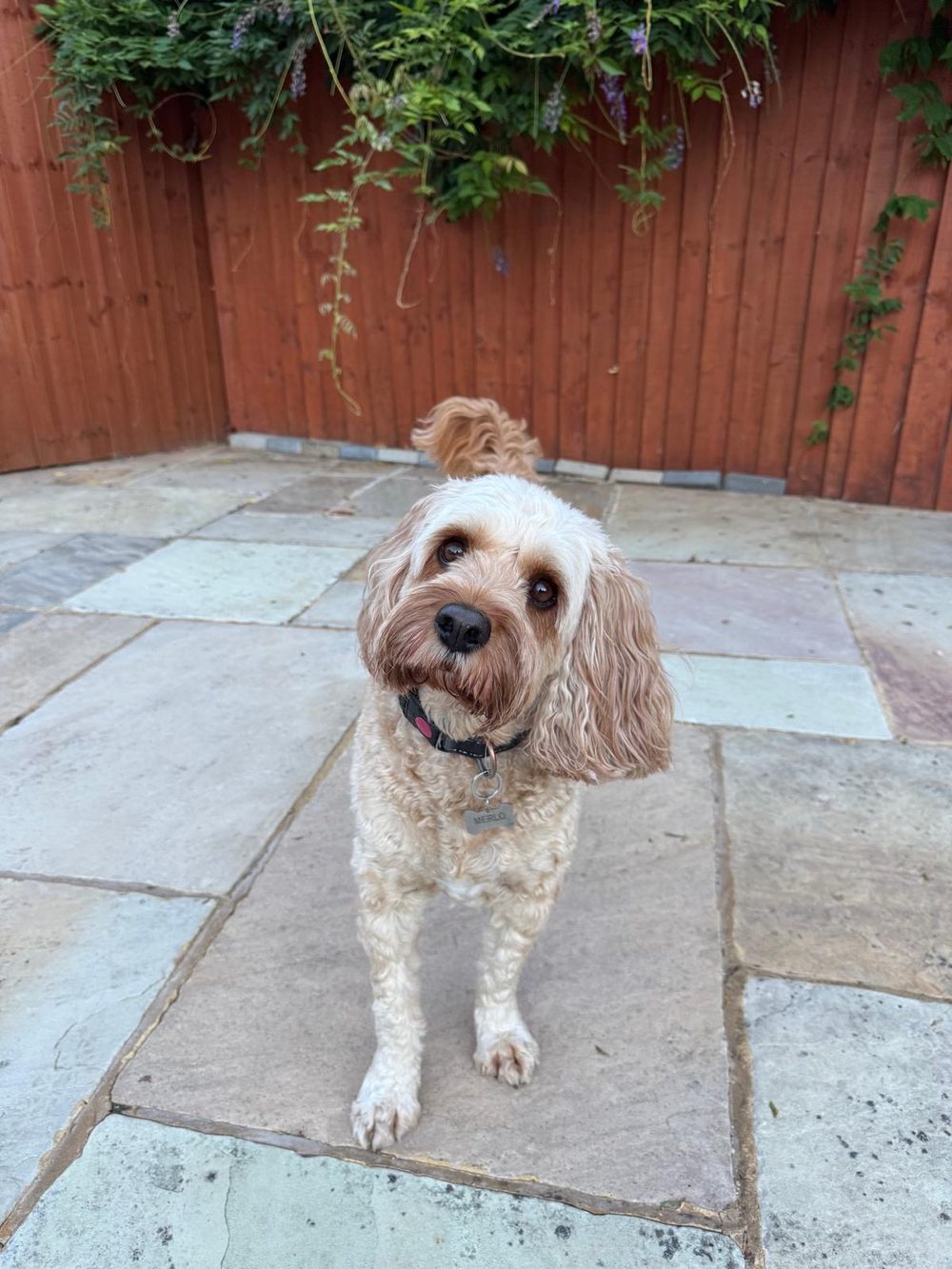
Merlo, the Petdentist® Cavapoo in our photographs, has Cavalier King Charles Spaniel in his family tree, which is a good reason to take his routine seriously. If your dog is small, short-muzzled, older or one of these breeds, daily cleaning matters more, and your vet may suggest more frequent checks.
What's safe, and what's not
A few everyday items do more harm than good in a dog's mouth.
| Avoid | Use instead | Why it matters |
|---|---|---|
| Human toothpaste | A dog toothpaste that is safe to swallow | Dogs cannot spit. Human toothpaste is made to be spat out and may contain fluoride, foaming agents or xylitol. |
| Anything containing xylitol (sometimes called birch sugar) | Xylitol-free products. Every Petdentist® product is xylitol-free. | Xylitol is toxic to dogs and can cause a dangerous fall in blood sugar and liver damage. Check sugar-free gum, sweets and foods made for people. |
| Cooked bones | Flexible rubber toys, with supervision | Cooking makes bone brittle. It can splinter, and it can break teeth. |
| Antlers, hooves, hard nylon bones and other rock-hard chews | Chews you can dent with a fingernail | Hard objects can fracture teeth, especially the large upper cheek teeth dogs crunch with (the carnassials). A broken tooth needs a vet. |
| Stiff brushes, or scraping at tartar | A soft, small-headed brush; leave hardened tartar to your vet | Enamel is thin, and tartar is bonded to the tooth. |
| Anaesthesia-free "scale and polish" | A veterinary dental clean under anaesthesia, when your vet advises it | The American Animal Hospital Association's 2019 dental guidelines call anaesthesia-free cleaning "not appropriate": it cannot clean or assess below the gumline in an awake dog. |
When to see your vet
If you notice loose or wobbly teeth, swelling, discharge, bleeding that does not settle, reluctance to eat, dropping food, drooling, pawing at the mouth or any change in behaviour, please contact your veterinary surgeon promptly. Home care supports professional care — it never replaces it.
Puppies: from 28 teeth to 42
Puppies have 28 baby (deciduous) teeth, which give way to 42 adult teeth by around six to seven months. Teething puppies chew a lot, so offer soft, flexible teething toys rather than anything hard.
It is also the best time to build the habit. Spend a few seconds a day lifting the lips, touching the teeth and offering a lick of dog toothpaste, and by the time the adult teeth are through, brushing is simply part of the day.
One thing to watch: if a baby tooth is still in place once the adult tooth has come through beside it, show your vet. Our puppies and kittens guide covers the first year in detail.